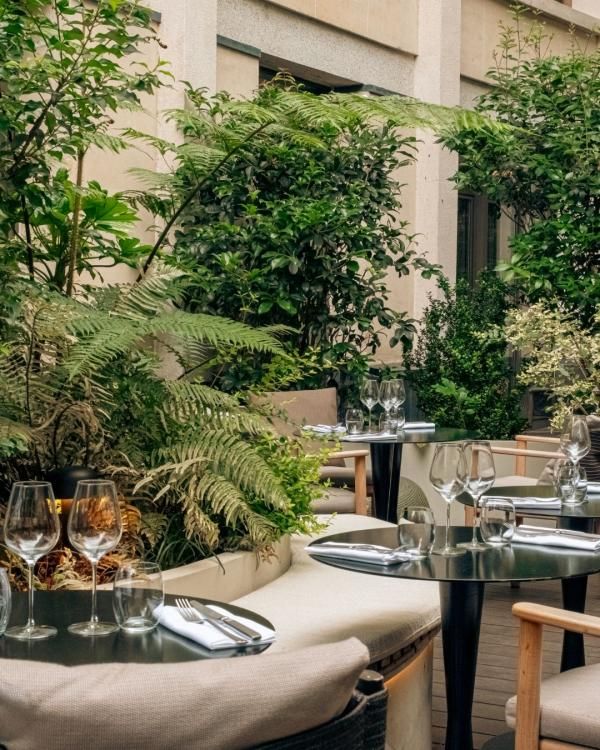
Escape the Urban Rush: Discover Our Secret Garden in the Heart of the Latin Quarter
Paris is a city that pulses with life. Its avenues overflow with cafés and boutiques, its museums teem with visitors, and the hum of activity never fades. But even in such a vibrant capital, there are rare sanctuaries where calm takes over. One of these hidden treasures awaits at Hotel Dame des Arts, a hotel with a garden in Paris. Tucked away in the Latin Quarter, the hotel’s secret courtyard offers peace, intimacy, and the luxury of slowing down. It is not just a garden—it is an experience of seclusion and tranquility, a hidden gem in the heart of the Left Bank.
A Hidden Haven in the Latin Quarter
The Latin Quarter is famous for its historic streets, the Sorbonne, and the Panthéon. It is a place of movement and ideas, always alive with conversation and discovery. Yet, behind the hotel’s walls lies a different world. The garden at Hôtel Dame des Arts is shaded by greenery, adorned with blossoms, and framed by walls that protect it from the noise of the city. The result is a retreat that feels both timeless and intimate. It is a haven where guests can rest, reflect, and reconnect with themselves after a day spent exploring Paris.
Morning Calm: Coffee Surrounded by Greenery
In the morning, the garden is bathed in soft light. Leaves glisten with dew, and the air carries the fragrance of flowers. Here, breakfast becomes more than a meal. Fresh croissants, fruit, and steaming coffee are enjoyed in an atmosphere of gentle calm. Guests staying in a hotel with garden in Paris have the rare privilege of starting their day away from the rush of the boulevards, wrapped instead in the quiet of nature. The subtle sounds of birdsong or the distant ringing of church bells from the Latin Quarter complete the experience. It is a Paris few expect, and one that lingers in memory.
Midday Serenity: Reading and Rest
As the city grows busy, the garden remains a sanctuary. After visiting a museum or strolling along the Seine, guests return to find shade and stillness. Many settle in with a book, echoing the literary spirit of Saint-Germain-des-Prés. Others simply close their eyes, letting the quiet rustle of leaves and the filtered sunlight create a moment of pause. The garden’s flora—climbing ivy, flowering shrubs, and potted plants—adds texture and color to this intimate space. It is a reminder that nature, even in the heart of Paris, has the power to soothe.
Evenings of Elegance: Lanterns and Cocktails
As the day softens into evening, the garden transforms. Lanterns cast a golden glow, and the air cools gently. Cocktails are served, and conversations begin, either whispered between couples or shared among friends. The atmosphere is intimate, refined, and authentic. Luxury here is not about grandeur but about connection: to the moment, to the place, and to each other. In the garden, time slows once more, and guests discover the art of living well in Paris.
A Sensory Experience in Every Season
The magic of the garden lies in its ability to change with the seasons. In spring, blossoms perfume the air with freshness. Summer brings long evenings, when laughter carries softly across the courtyard. Autumn colors the foliage with warm shades of red and gold, while winter offers a quiet refuge, where a warm drink can be enjoyed under blankets as the city beyond bustles. Each season shapes the atmosphere, ensuring that the garden is never the same, yet always serene.
The Garden as the Soul of the Stay
What makes this space unique is not only its beauty, but the role it plays in the experience of Hôtel Dame des Arts. In a city celebrated for its landmarks and monuments, this hidden garden reminds guests that luxury can also mean simplicity and stillness. It is a place where the noise of the city fades and where the essence of Paris—the art, the intimacy, the poetry—reveals itself in its quietest form.
For travelers seeking authenticity, the garden is not an accessory but the heart of the stay. It is the moment when the guest becomes more than a visitor; they become part of the rhythm of the Left Bank. And in this rhythm, they discover that Paris is not only to be seen but to be felt.